What is psilocybin? Understanding magic mushrooms and their effects
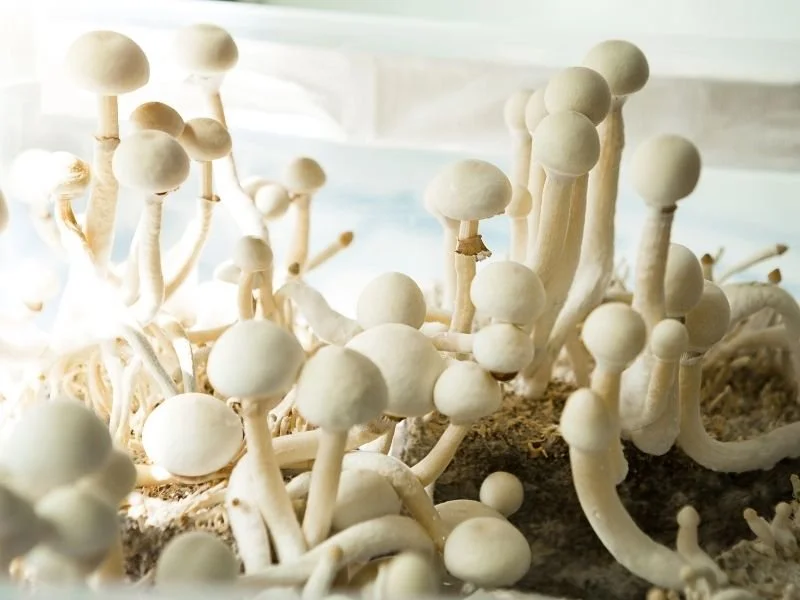
Nature never stops surprising us. Now, from ancient times, we get to know something hidden in the forests and damp fields, waiting to be discovered: fungi (mushrooms). There are several species of mushrooms; some are ideal for culinary uses, others possess interesting properties that have not only fascinated but also aided humans for thousands of years.
At the core of this fascination is a naturally occurring compound that has created an entire revolution in both neuroscience and culture: psilocybin mushrooms.
You probably know psilocybin mushrooms by their more common name: magic mushrooms. But what is psilocybin, exactly? How do psychedelic drugs, especially psilocybin mushrooms, interact with our minds, and why is the medical community suddenly paying so much attention to this substance?
Let's dive into this topic and understand where the sudden interest in psilocybin mushrooms comes from.
The chemistry behind the "magic mushrooms"
So, what is psilocybin? First of all, we have to look at it as a chemical compound that is produced by more than 200 species of fungi. When an individual is ingesting psilocybin mushrooms, their body breaks down the psilocybin into a different chemical called psilocin. This chemical is the one that actually crosses the blood-brain barrier and causes the psychoactive effects associated with the psilocybin mushrooms.
These psychedelic drugs have been used by indigenous cultures for centuries, particularly in Mesoamerica, for spiritual and healing rituals. Today, however, they are categorized as psychoactive drugs. This means they change the function of the nervous system and alter perception (causing hallucinogenic effects), mood, cognition, or behavior.
While the term "drug" often carries a heavy stigma, in this context, it simply refers to the substance's ability to interact with human biology.
You might be interested: Psilocybin PTSD: Exploring innovative treatment options for veterans
Effects of psilocybin on the brain
Psilocybin is classified as one of the classic hallucinogenic drugs (or psychedelic drugs), placing it in the same family as LSD and mescaline. But how does it work?
Imagine your brain as a snowy hill with well-worn sledding paths. These paths represent your habitual way of thinking. Psilocybin mushrooms act like a fresh layer of snow, temporarily covering those old tracks and allowing the sled (your thoughts) to move in new, free-flowing directions.
Scientifically speaking, psychedelic drugs, specifically psilocin, bind to serotonin receptors in the brain, specifically the 5-HT2A receptor. This connection enhances communication between parts of the brain that typically do not interact. This unique "cross-talk" is what leads to the altered state of consciousness, where users might see sounds or hear colors, and experience profound shifts in perspective.
This is why some people refer to magic mushrooms as serotonin in nature. In fact, it is this same "cross-talk" that makes psilocybin so popular for its mental health benefits, especially for major depressive disorder.
Learn about our legal psilocybin programs here.
The experience: set and setting
When talking about psilocybin use, it's generally not possible to simply ignore the subjective experience, often called "the trip." The effects of psilocybin mushrooms can vary significantly depending on the dosage and the individual. At lower doses of this psychedelic drug, colors may seem brighter, and the person might feel a deep sense of oneness or interconnectedness with nature and people.
At higher doses, the experience becomes much more intense, involving hallucinogenic effects and deep emotional introspection.
However, the experience of this psychedelic drug is heavily influenced by "set and setting." "Set" refers to the user's mindset (mood, expectations, and fears), while "setting" refers to the physical environment.
Because taking psilocybin amplifies what is already happening inside your mind, a calm environment and a positive mindset are crucial. This sensitivity is why recreational use can be unpredictable compared to controlled therapeutic use.
This is why psilocybin assisted therapy is becoming more popular. The benefits on mental health disorders such as treatment resistant depression and obsessive compulsive disorder are monumental, and proven on several clinical research.
A potential breakthrough for mental Health
One of the most impactful and exciting aspects of magic mushrooms right now is their potential to treat various mental health disorders. For decades, psychedelic research was halted due to legal restrictions, but the "Psychedelic Renaissance" is now in full swing.
Researchers at institutions like Johns Hopkins are finding that psilocybin use may be beneficial when treating conditions that are notoriously difficult to manage with talk therapy alone. Psilocybin assisted therapy addresses the root cause of several mental health issues, allowing individuals to significantly improve after a single dose psilocybin treatment to treat depression.
Psilocybin assisted therapy, combined with talk therapy, can also have profound effects on depression, anxiety, and PTSD. In fact, unlike traditional antidepressants, which must be taken daily to manage symptoms, psilocybin use in a clinical setting often involves just one or two sessions.
Additionally, patients frequently report that these experiences allow them to break out of rigid, negative thought loops, offering a "reset" for their mental health.
You might be interested in: How long does a mushroom trip last?
Risks, safety, and drug abuse
Despite the glowing headlines, it is essential to approach psychedelic drugs with caution. Magic mushrooms are not a miracle cure for everyone, and they do have some health risks.
While psilocybin is generally considered to have a low potential for physical addiction compared to other drugs, even controlled substances, the conversation around drug abuse is still relevant. Yes, people rarely abuse magic mushrooms in the way they might abuse controlled substances such as opioids or stimulants, but it's vital to mention that irresponsible psilocybin use can lead to psychological distress.
The most common risk is a "bad trip," which can involve terrifying hallucinogenic effects, paranoia, panic, and other adverse effects. Further research shows that, for individuals with a personal or family history of psychiatric illness such as psychosis or schizophrenia, hallucinogenic drugs can trigger or worsen these conditions.
Furthermore, because psilocybin is illegal in many parts of the world, buying it on the black market carries risks of misidentification. It may not be pure psilocybin mushrooms. And eating the wrong mushroom, or even poisonous mushrooms can be fatal.
The future of psilocybin
We are currently standing at a crossroads regarding how society views these substances. Laws are beginning to change; places like Oregon and Colorado in the United States, as well as countries like Australia, are moving toward decriminalization or medical legalization. The stigma surrounding psychoactive drugs is slowly being replaced by scientific curiosity and compassion for those suffering from treatment-resistant conditions.
Learn more about our legal and supported psilocybin retreats.
So, what is psilocybin? It is a chemical, a tool, a history, and perhaps a medicine. As we continue to study psilocybin mushrooms, we may find that they offer a key to unlocking the deeper mysteries of the human mind, helping us heal in ways we never thought possible.
For more information and to tailor a program that meets your needs schedule a free Exploration Call and don’t forget to follow us on Instagram. We are committed to providing a safe, nurturing, and transformative experience.
