
How facilitators handle challenging psilocybin journeys
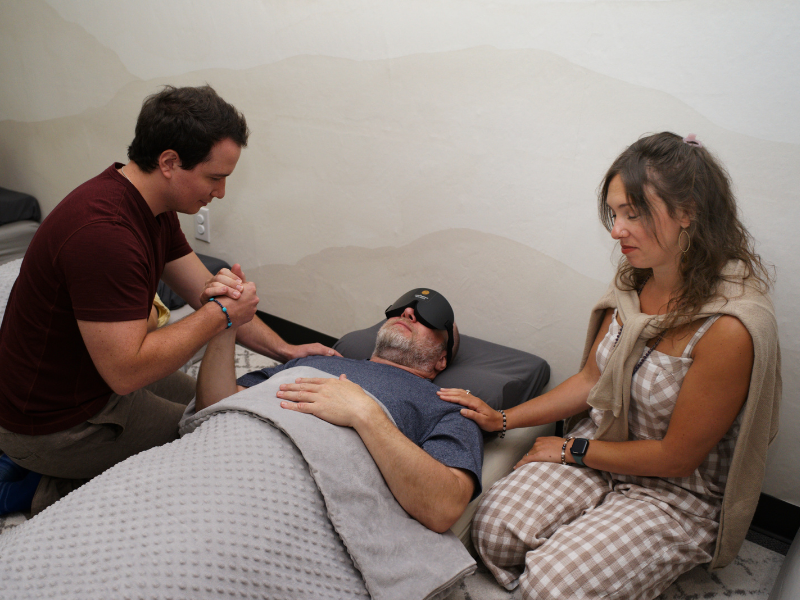
When individuals choose to participate in a supervised psilocybin session, they often hope for experiences filled with awe, peace, or profound emotional release. However, non-ordinary states of consciousness can also bring up intense anxiety, lingering grief, physical discomfort, or unsettling realizations. In these delicate moments, navigating challenging psilocybin journeys requires a high level of skill, steady presence, and specialized training from a qualified facilitator.
Popular culture often labels difficult psychedelic experiences as "bad trips," but experienced facilitators view them quite differently. When supported within a secure and structured environment, intense or uncomfortable moments frequently become the most meaningful catalysts for emotional breakthrough and lasting personal growth.
In legal, state-regulated settings like Oregon, licensed facilitators are trained to guide participants through every stage of a session. Rather than trying to suppress or abruptly stop uncomfortable feelings, a facilitator's true role is to help you move through the experience safely and with compassionate guidance. Understanding how facilitators handle these challenging moments can help you feel grounded, prepared, and confident as you consider embarking on your own journey.
Understanding why difficult moments occur
Before examining how facilitators respond to distress, it is helpful to understand why challenging psilocybin journeys happen in the first place. Psilocybin works by temporarily quieting the brain's Default Mode Network, which is responsible for maintaining our everyday ego structures, habitual self-narratives, and psychological defense mechanisms. When these defenses soften, thoughts and feelings that are usually kept below conscious awareness can surface rapidly.
Several common factors can contribute to an intense or uncomfortable experience during a session:
Resistance to loss of control: As ego structures begin to dissolve, it is natural for the analytical mind to instinctively push back. Attempting to maintain everyday cognitive control against the natural flow of the medicine often generates feelings of panic or confusion.
Unresolved emotional memories: Deep-seated grief, past relational stress, or unexpressed fear can emerge into conscious awareness. While facing these emotions feels heavy in the moment, bringing them to light is often a necessary step toward long-term healing.
Somatic and sensory overwhelm: Psilocybin heightens sensory perception and body awareness. Participants may experience intense physical sensations, such as nausea, muscle tightness, or temperature shifts, which can feel alarming if not properly contextualized.
Environmental discomfort: Subtle factors in the physical environment, such as unfamiliar sounds, improper lighting, or feeling observed, can create feelings of unease if the setting is not carefully curated.
Experienced practitioners do not view difficulty as a failure of the session. Instead, they operate on a fundamental harm reduction principle: difficult is not the same as bad.
You might be interested in Why psilocybin for trauma reaches beyond talk therapy
The principle of non-directive facilitation
Under Oregon Measure 109 and ORS 475A, facilitators operate under a non-directive model of care. This approach is built on the foundation that every individual possesses an innate capacity for self-healing and personal insight. Unlike traditional clinical settings where a therapist might direct the conversation, offer diagnostic interpretations, or manage symptoms, a non-directive facilitator does not try to steer your journey.
During intense moments, a non-directive facilitator provides what practitioners call "holding space." They create a steady, calm, and non-judgmental atmosphere where you are entirely free to express whatever arises. If you need to cry, speak, lie quietly, or move your body, the facilitator ensures you can do so in complete physical and psychological safety. Their primary job is not to fix your experience but to act as a grounded anchor so that you can navigate it yourself.
Core de-escalation and grounding techniques
When a participant encounters overwhelming fear or emotional pain during a session, facilitators employ gentle, proven de-escalation techniques. These methods are designed to restore a sense of safety without interrupting the natural flow of the experience.
Reassuring verbal guidance: A facilitator uses a calm, steady voice to offer simple, reassuring statements. Reminders such as "You are safe," "The medicine is working as it should," and "This state is temporary" can immediately help quiet an anxious mind.
Breathwork and somatic anchoring: Panic often causes shallow breathing and muscular tension. Facilitators gently invite participants to slow their breath, encouraging deep abdominal inhales and long exhales. Connecting with the physical contact of the floor, chair, or blanket helps anchor a disoriented participant back into the present moment.
Sensory adjustments: Subtle changes to the room can dramatically lower stress levels. A facilitator might adjust the music playlist to softer, warmer tones, dim the lights, offer a warm blanket, or invite the participant to adjust their eye shades.
Consensual physical contact: With explicit consent established during preparation, a facilitator may offer grounding physical touch, such as holding a hand or placing a supportive hand on a shoulder. Physical touch can provide a powerful anchor when words are not enough.
Encouraging "through, not down": Rather than attempting to suppress intense feelings, facilitators encourage participants to lean into the discomfort with curiosity. By asking open-ended questions like "What does this feeling want to show you?" or "Can you breathe into that tightness?" facilitators help transform fear into understanding.
How preparation prevents panic
The most effective way to navigate difficult moments during a session is through careful preparation long before the medicine is administered. Oregon regulations require a dedicated preparation process where facilitators work with participants to build mutual trust and set clear boundaries.
During preparation, facilitators focus on several key steps that help safeguard against panic during challenging psilocybin journeys:
Establishing communication signals: Facilitators and participants establish simple physical or verbal signals to communicate needs during deep states of inward focus, ensuring support is always available without breaking the participant's internal process.
Clear informed consent and touch boundaries: Participants define exact boundaries regarding physical touch, music preferences, and intervention styles well before the session begins, ensuring complete control remains with the participant.
Intention setting versus expectations: Facilitators help participants form clear intentions while letting go of rigid expectations, preparing them to accept whatever feelings or insights arise naturally.
Safety and health screening: Reviewing health history and potential contraindications ensures that participants are psychologically and physically ready for the intensity of a session.
If you want to explore more about psilocybin journeys, see more about our 5-day psilocybin programs in Oregon.
Transforming difficulty through post-session integration
A challenging experience only turns into a true breakthrough when it is properly integrated after the session ends. Returning to daily life with raw or unsettling realizations can feel confusing if you do not have structured space to process them.
During post-session integration calls, your facilitator helps you make sense of what occurred during your journey. An experience that felt frightening or overwhelming in the moment often reveals deep personal value when viewed in hindsight. For example, a sudden wave of sadness during a session might highlight an unacknowledged need for rest, a call to mend a key relationship, or the necessity of letting go of an outgrown habit.
Through structured dialogue, journaling prompts, and somatic practices, facilitators assist you in translating those difficult emotional insights into practical, positive daily changes.
Choosing a facilitator who holds a steady space
Navigating difficult terrain requires a guide who is comfortable with intensity, grief, and emotional depth. When evaluating prospective facilitators, take time during your initial consultation to ask about their experience with challenging sessions. A skilled facilitator will speak openly about their grounding practices, their training in harm reduction, and their commitment to non-directive support.
Embracing challenging psilocybin journeys within a legal, supported environment ensures that you never have to navigate difficulty alone. With proper preparation, steady facilitation, and thorough integration, even the most intense moments can become pathways toward profound clarity and self-compassion.
For more information and to tailor a program that meets your needs, schedule a free Exploration Call and don’t forget to follow us on Instagram. We are committed to providing a safe, nurturing, and transformative experience.
