Does psilocybin cause brain damage? What science says

When people begin researching legal psychedelic service centers or clinical trials, one question comes up more often than almost any other: does psilocybin cause brain damage? For decades, public health messaging routinely lumped classic psychedelics together with toxic, neurodegenerative illicit drugs. Because of this historical stigma, it is completely natural to wonder whether taking a macro-dose of magic mushrooms will cause cell death, memory impairment, or permanent structural harm to your central nervous system.
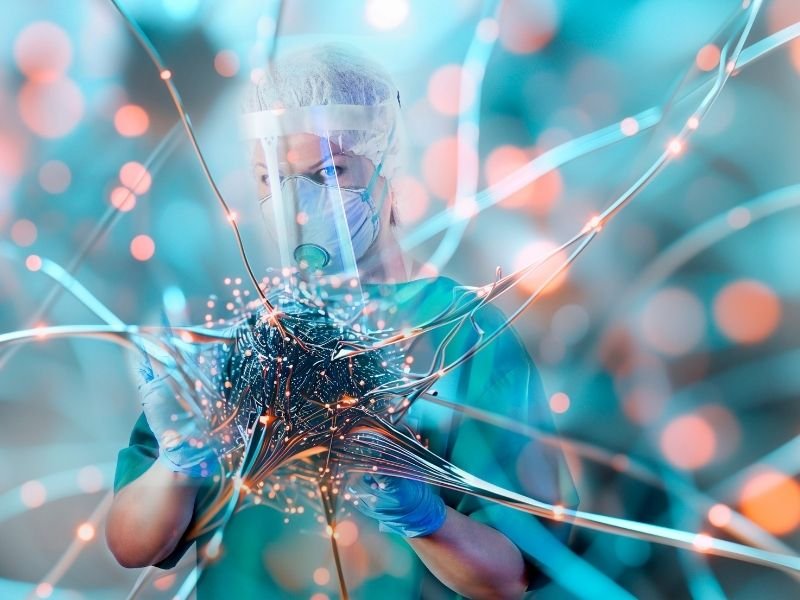
Fortunately, modern neuroimaging and clinical neuroscience paint a vastly different picture. The short answer backed by decades of research is no: psilocybin does not cause physical brain damage or neurotoxic cell death. Instead of destroying tissue, recent breakthrough studies reveal that psilocybin temporarily shifts how brain networks communicate, opening an acute window of heightened neuroplasticity.
Understanding what actually happens inside the brain during and after a session clarifies why this compound is increasingly viewed as a tool for cognitive restoration rather than neurological harm.
What science says about psilocybin and neurotoxicity
To answer whether does psilocybin cause brain damage from a medical standpoint, neuroscientists look specifically for neurotoxicity—the physical death or structural degradation of brain cells.
Substances that cause real brain damage, such as alcohol abuse, heavy metals, or methamphetamine, directly destroy neurons, damage synaptic terminals, or trigger inflammatory lesions in brain tissue. Classical psychedelics like psilocybin do not operate through these destructive pathways. Psilocybin acts as an agonist at serotonin 2A (5-HT2A) receptors, temporarily binding to these sites to modify signal transmission across existing pathways.
In fact, preclinical research from institutions like the Allen Institute and Yale University shows that psilocybin actively promotes neurogenesis—the growth of new neurons—and increases the density of dendritic spines, which are the physical connections where neurons receive incoming signals. Rather than causing cell loss, psilocybin stimulates the release of Brain-Derived Neurotrophic Factor (BDNF), a protein essential for maintaining structural flexibility and neuron survival.
We recommend that you see Who qualifies for legal psilocybin services in Oregon?
What actually happens in the brain during a psilocybin session?
If psilocybin does not cause structural damage, why does a psychedelic experience feel so intense and disorienting? To understand this, it helps to examine what functional magnetic resonance imaging (fMRI) scans reveal during an active session.
1. Temporary desynchronization of the Default Mode Network
A groundbreaking study from Washington University in St. Louis published in Nature demonstrated that psilocybin temporarily desynchronizes the Default Mode Network (DMN). The DMN is the primary neural network responsible for your sense of self, ego, and daily introspective habits.
During a session, psilocybin temporarily scrambles this network's synchronized firing patterns, allowing regions of the brain that normally do not talk to each other to exchange signals directly.
2. The return to baseline
While this network scramble is dramatic, it is entirely temporary. Neuroimaging shows that global network connectivity begins returning to its normal organization as soon as the compound is metabolized by the liver. Once the acute trip ends, the Default Mode Network re-establishes itself, leaving individual brain structures completely intact.
3. The residual neuroplastic window
Importantly, researchers noted that after the major disruption resolves, a small, subtle residual effect remains in hippocampal-cortical connectivity for weeks. This residual effect is not brain damage; it is a temporary state of brain entropy and flexibility that allows individuals to break out of rigid, negative thought loops and establish healthier cognitive habits.

Psychological safety vs. physical damage
While answering whether does psilocybin cause brain damage or not yields a clear negative on a biological level, it is vital to distinguish between physical safety and psychological vulnerability.
Psilocybin drops your psychological defenses completely. In an unmonitored, chaotic, or unsafe environment, a high dose can trigger intense panic, disorientation, or emotional distress. Furthermore, for individuals with a personal or family predisposition to psychotic conditions like schizophrenia or bipolar disorder, psychedelics can potentially precipitate an acute psychiatric episode.
This key distinction highlights why unsupervised recreational use carries genuine psychological risks, even though the compound itself is non-toxic to physical brain tissue.
If you are curious about how high-profile clients protect their well-being and personal privacy during a journey, explore our detailed breakdown of [confidentiality safeguards for executives].
How regulated service frameworks protect brain and systemic health
Because the primary risks of psilocybin are emotional and psychological rather than physical, experiencing this compound within a structured, legal environment is essential for long-term health.
Under state-regulated frameworks like Oregon's, safety is maintained through strict clinical protocols:
Comprehensive medical screening
Before taking psilocybin, clients undergo thorough health evaluations to screen out psychiatric contraindications and harmful medication interactions, ensuring the mind and body are prepared.
If you feel curious about this path, book an exploration call with Confluence Retreats to begin your screening process.
Calibrated dosing in protected spaces
Sessions take place in quiet, comfortable settings designed for deep nervous system rest—such as the serene natural landscapes of Ashland, Oregon—far removed from outside stressors.
Continuous professional supervision
Licensed facilitators remain present throughout the entire 6-to-8-hour journey. They do not analyze or direct your thoughts but instead act as a grounded anchor to ensure your complete physical safety.
Integration support
In the days following a journey, facilitators assist you in harnessing the neuroplastic window, helping you translate emotional breakthroughs into lasting behavioral changes.
To learn more about how licensed centers operate under state guidelines, read our complete guide to [licensed psilocybin service centers in Oregon].
Frequently Asked Questions
Does psilocybin stay in your brain permanently?
No. Psilocybin is rapidly converted by the body into psilocin, which is fully metabolized and excreted by the liver and kidneys within 24 hours. The lasting insights or mood improvements following a session are due to subsequent neuroplasticity, not the physical presence of the molecule.
Can you die from a psilocybin overdose?
Psilocybin has an exceptionally low toxicity profile. The physical lethal dose in humans is estimated to be hundreds of times higher than an effective therapeutic dose. Death from toxicity alone is virtually unheard of in medical literature.
What is HPPD, and does psilocybin cause it?
Hallucinogen Persisting Perception Disorder (HPPD) is a rare condition involving persistent visual disturbances after drug use. While HPPD is most frequently linked to synthetic hallucinogens used in unregulated settings, clinical studies show it is extremely rare when psilocybin is administered in supervised, clinical environments.
For more information and to tailor a program that meets your needs,schedule a free Exploration Call and don’t forget to follow us on Instagram. We are committed to providing a safe, nurturing, and transformative experience.
