
Can out-of-state residents use Oregon psilocybin services?
When Oregon passed Measure 109 to create the nation's first state-regulated, supervised psilocybin framework, it opened a historic pathway for personal growth, healing, and wellness. For individuals living outside the Pacific Northwest, one central question often arises before booking flights or arranging time off: is Oregon psilocybin for out-of-state residents fully legal?
The clear answer is yes. Under Oregon Health Authority (OHA) regulations, access to supervised psilocybin services is based entirely on age and health safety screening rather than state residency. You do not need an Oregon driver's license, local mailing address, or medical referral to participate. However, navigating a regulated session as a visitor requires a thorough understanding of state laws, remote preparation protocols, and travel logistics to ensure your experience is safe, legal, and deeply restorative.
Because Oregon is currently one of the few places in the United States with a legal, licensed framework for supervised adult use, traveling to the state for this purpose has become increasingly common. Understanding the regulatory details beforehand will help you plan a peaceful journey without unexpected legal or logistical hurdles.
Is there a residency requirement for Oregon psilocybin services?
The Oregon Psilocybin Services Act, codified under ORS 475A, contains no residency restrictions for clients. While early drafts of the legislation included temporary residency rules for facility owners and facilitators during the initial rollout, client access has always been open to non-residents.
To access services, you simply need to be 21 years of age or older and complete the required health screening process with a state-licensed facilitator. Oregon’s model operates as a "supported adult use" framework rather than a medical prescription system. This means you do not need a diagnosis for depression, PTSD, or anxiety, nor do you need a doctor’s note.
However, the absence of a residency requirement does not mean psilocybin is available like retail cannabis. The law establishes strict operational boundaries:
On-site consumption only: Psilocybin products can only be purchased and consumed inside a licensed psilocybin service center during an active administration session.
No retail sales or take-home products: You cannot buy psilocybin mushrooms, microdose capsules, or edibles to take back to your hotel, vacation rental, or home state.
Strict facility scopes: All handling of psilocybin occurs under the direct supervision of a licensed facilitator who has completed state-approved training.
To learn more about how state-accredited facilities operate under these guidelines, explore our detailed breakdown of: What are the legal implications of attending a psilocybin retreat in the US?
Who is eligible for psilocybin services in Oregon?
While residency is not a barrier, physical and psychological safety criteria determine who can participate. Every client must undergo a safety screening during a mandatory preparation session before purchasing or consuming psilocybin.
Age and identification requirements
You must present a valid government-issued photo identification proving you are at least 21 years old. Accepted forms of ID include out-of-state driver's licenses, state identification cards, military IDs, or international passports.
Medical and safety disqualifiers
Oregon Health Authority regulations require facilitators to evaluate clients for specific contraindications. You may be determined ineligible for services if you meet any of the following safety criteria:
Lithium use: Clients who have taken Lithium within the past 30 days are strictly ineligible due to high risk of adverse reactions, including seizures.
Active psychosis: A personal history of active psychosis or schizophrenia disqualifies individuals from receiving psilocybin services under current state safety guidelines.
Ideation of harm: Individuals currently experiencing active ideation to harm themselves or others cannot participate until psychological stability is established and supported.
Lack of transportation plan: State law mandates that every client must submit a written transportation plan before dosing. You cannot drive yourself away from the service center after a session.
How the three-phase process works for out-of-state visitors
Oregon requires a structured three-phase service model: Preparation, Administration, and Integration. For visitors traveling from other states or countries, licensed facilitators design this sequence to accommodate travel schedules through telehealth options.
Phase 1: Virtual preparation sessions
Your journey begins long before you arrive in Oregon. The preparation session must take place at least 24 hours (and no more than 90 days) prior to your administration day. Most facilitators conduct this meeting via secure video call. During preparation, you will review the standardized Client Information Form, complete safety screenings, set intentions, and establish a mandatory support and transportation plan for your dosing day.
Phase 2: In-person administration session
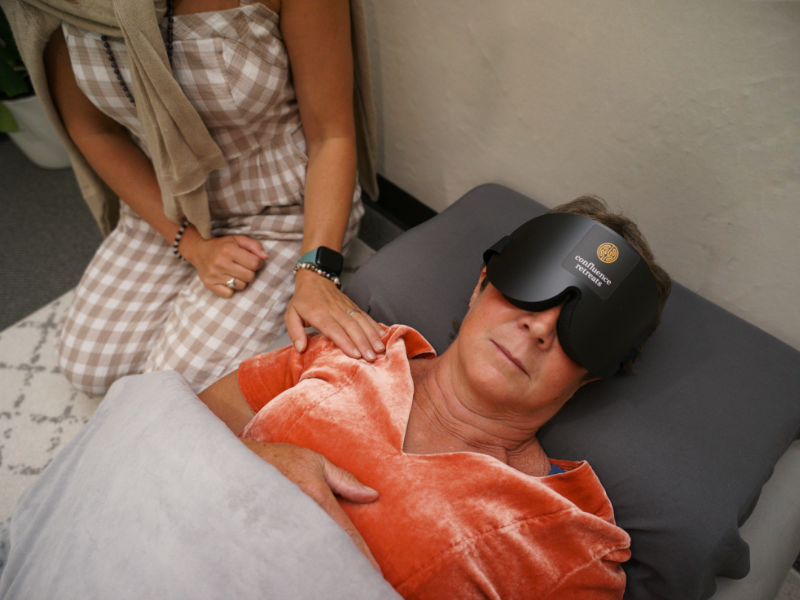
You must travel to Oregon for your administration session at a licensed service center. Once you arrive, you verify your identity, select and purchase your psilocybin product directly from the facility, and consume it in a private or small-group room designed for sensory comfort. Your facilitator remains present throughout the entire session (typically 4 to 8 hours depending on dosage) using a non-directive approach to support your physical and emotional safety.
Phase 3: Post-session integration
Integration helps you make sense of your experience and translate insights into everyday life. State rules require facilitators to offer an integration session within 72 hours of administration. Out-of-state visitors can complete this session virtually after returning home, allowing you to integrate comfortably in your normal environment.
Learn more about our psilocybin programs and if they’re the right fit for you. Book an exploration call.
Travel logistics and planning tips for out-of-state clients
Planning travel for Oregon psilocybin for out-of-state residents requires a thoughtful schedule. Rushing off a flight into a high-dose administration session, or heading straight to the airport right after, can create unnecessary stress on your nervous system.
Here are key recommendations for organizing your trip:
Arrive at least 24 hours early: Give your body time to adjust to time zone differences, hydrate, and relax. Staying near your service center the night before helps reduce travel anxiety.
Arrange guaranteed post-session transport: Because driving is prohibited immediately after a session, coordinate with a trusted friend, local ride service, or private transport arranged by your retreat center.
Book a buffer day for rest: Avoid scheduling heavy work tasks or travel back home on the day immediately following your session. Plan to spend a quiet day walking in nature, journaling, or resting in your room.
Choose lodging mindfully: Select quiet, comfortable accommodations where you feel secure. Many out-of-state clients prefer retreat centers that offer integrated lodging in serene natural surroundings.
You might be interested in: OHSU study shows Oregon’s regulated psilocybin services offer lasting mental health benefits
Legal boundaries: Federal law vs. state regulations
It is vital for visitors to recognize the distinction between Oregon state law and federal law. While psilocybin services are legal and regulated within Oregon state boundaries, psilocybin remains a Schedule I controlled substance under federal law.
Do not transport across state lines: Carrying psilocybin across state borders by car, train, or plane is a federal crime. All psilocybin must be consumed entirely within the licensed facility.
Avoid federal property: Federal lands within Oregon, such as National Parks, National Forests, and federal courthouses, remain under federal jurisdiction. State psilocybin laws do not apply on federal land.
Airport regulations: Transporting psilocybin into airports or attempting to fly home with any residual product is strictly prohibited. Service centers safely dispose of any unused portion onsite.
What does an Oregon psilocybin session cost for non-residents?
Because Oregon's program operates without state subsidies or health insurance coverage, clients pay out-of-pocket for services. When researching Oregon psilocybin for out-of-state residents, understanding the fee structure will help you budget accurately.
Total costs generally consist of three separate components:
Facilitator fee: Covers preparation sessions, administration day supervision, and follow-up integration calls.
Service center room fee: Covers the use of the licensed facility, private quiet rooms, and amenities.
Psilocybin product fee: Paid directly to the service center for the tested, state-certified psilocybin product.
Total costs typically range from $1,000 to $3,000 for individual high-dose sessions, though microdose sessions or group administration options often cost significantly less. Always request a detailed written quote from your provider before finalizing travel arrangements.
Finding a licensed service center and facilitator
Selecting the right care team is the cornerstone of a meaningful journey when accessing Oregon psilocybin for out-of-state residents. You can verify the status of any facility or practitioner by checking the official public directory maintained by the Oregon Health Authority.
When interviewing facilitators for a long-distance experience, consider asking:
How do you conduct virtual preparation and integration calls for out-of-state clients?
What experience do you have supporting clients with my specific goals or background?
Can you recommend peaceful nearby lodging and local transportation options?
What safety protocols do you follow if I feel overwhelmed during a session?
For more information and to tailor a program that meets your needs, schedule a free Exploration Call and don’t forget to follow us on Instagram. We are committed to providing a safe, nurturing, and transformative experience.
