Is microdosing addictive? Differences between microdosing and macrodosing psilocybin
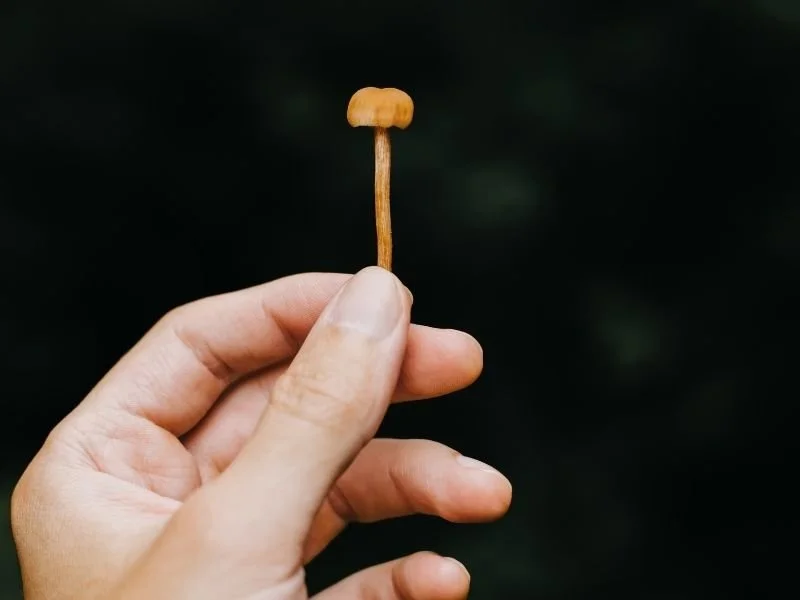
Growing psychedelic research has promoted a resurgence in these substances’ popularity, particularly psilocybin (the active compound in ‘magic mushrooms’). From counter-culture to mainstream wellness discussions, this shift is largely driven by the growing scientific evidence of the therapeutic potential of psilocybin for mental health conditions like depression, anxiety, addiction, and PTSD.
The two most commonly discussed consumption methods are microdosing and macrodosing, which differ dramatically in their intent, experience, and potential side effects. A crucial question that underpins all psychedelic use is the potential for addiction, a concern that requires careful consideration for both dosing strategies.
Is psilocybin microdosing addictive?
Psilocybin and classical psychedelics in general have a very low potential for addiction compared to other substances. This is due to the fact that psilocybin does not interact with the brain’s reward system (the dopamine pathways) in the same way as highly addictive drugs like opioids, alcohol, or nicotine.
Additionally, the body quickly builds a tolerance to the psychedelic effects of psilocybin. So, if an individual were to take a full dose (also called macrodose) for two days in a row, it is most likely that the second dose would have a significantly smaller impact. This makes frequent use largely unappealing.
You can also read: Why self-medicating with psychedelics is dangerous without retreat-level support
However, the question of addiction becomes more nuanced when considering microdosing, which involves taking sub-perceptual doses on a consistent, cyclical schedule. The user does not trip or hallucinate, but rather seeks subtle benefits like improved mood, enhanced creativity, or increased focus.
The primary concerns with microdosing often relate less to addiction and more to its long-term effects and potential for misuse. Because microdosing is often self-administered without medical oversight, users may unintentionally consume higher-than-intended doses, leading to unexpected perceptual changes or increased anxiety.
Differences between microdosing and macrodosing
A macrodose or heroic dose is a full dose of psilocybin mushrooms designed to induce a powerful, temporary altered state of consciousness. The full dose trip involves hallucinations, profound shifts in perception, deep emotional breakthroughs, and in some cases, mystical experiences.
The main difference between a microdose and a macrodose is that higher doses of psilocybin require careful preparation and supervision. This is why macrodoses are often administered in retreat and therapeutic settings.
In stark contrast, microdosing uses a dose so small that it is sub-perceptual. The key intention is to experience no notable changes in consciousness, visuals, or sensations that would impair daily functioning. The effects, if felt at all, are subtle: a slight lift in mood, greater appreciation for surroundings, or a sense of mental clarity.
Both consumption methods are valid; but their effects and purposes are different. Microdosing is not therapeutic in the sense of a single, transformative event, but rather as a cognitive and emotional enhancer over time. However, these benefits are less scientifically proven in contrast to a full dose.
Macrodosing, while not chemically addictive, carries a higher risk of a "bad trip," which can involve intense fear, paranoia, or panic. Despite possible side effects, clinical studies show that, with proper set and setting, macrodoses can be incredibly effective, often achieving lasting improvements in mental health after just one or two sessions.
You might be interested in: Are "bad trips" the whole story? Unpacking the psilocybin myth
Transformative vs. sub-perceptual effects
The current scientific evidence for the two approaches shows a striking difference in proven efficacy. Research supporting the benefits of macrodosing is robust and keeps growing each passing day. Several clinical trials have demonstrated that high-dose psilocybin, when paired with professional psychotherapy, can produce significant and long-lasting reductions in symptoms for conditions like treatment-resistant depression, anxiety in cancer patients, and substance use disorders.
In comparison, the evidence for the claimed benefits of microdosing is currently in its early stages and is frequently hampered by methodological challenges. Much of the data is based on self-report surveys and observational studies, which consistently show that microdosers do report improvements in mood, focus, and creativity.
The issue is that, when tested within the gold standard of scientific research (double-blind, placebo-controlled trials), the reported benefits of microdosing fail to outperform the placebo group. This means that much of the reported positive effects may be driven by expectations, not by an actual physiological response.
So, what’s your take? Keep in mind that a full dose can translate into more notable long-term benefits and offers a beacon of hope for the treatment of mental health conditions. If you’re seeking emotional breakthroughs, deeper and meaningful experiences, macrodosing could be for you.
For more information and to tailor a program that meets your needs, schedule a free Exploration Call and don’t forget to follow us on Instagram. We are committed to providing a safe, nurturing, and transformative experience.
